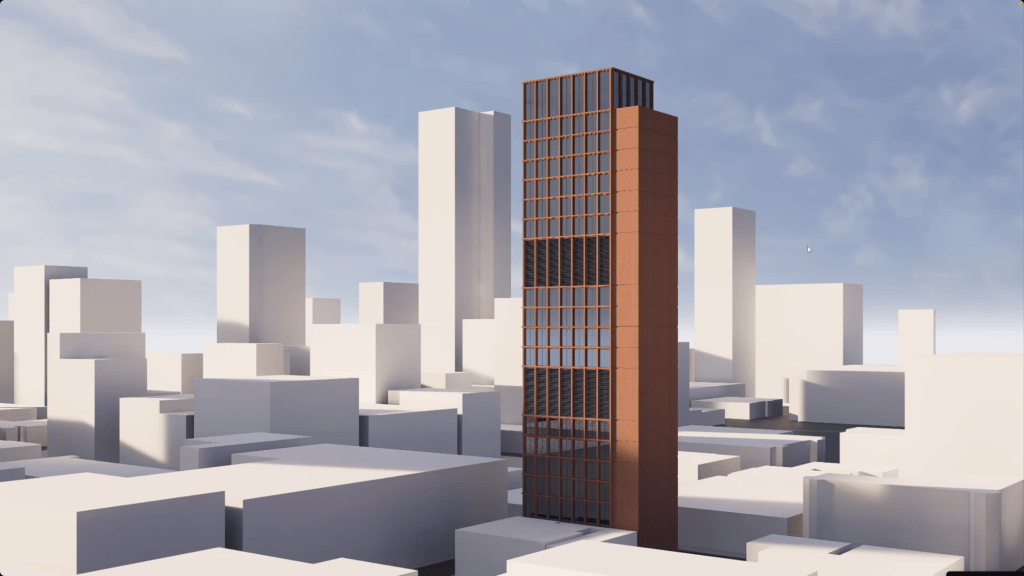
When I wrote in January that a 19-story high-rise was planned at 934 Central in Downtown Kansas City (northwest corner of 10th and Central), I was curious what the usage would be for the building. I noted that the project was primarily commercial as the development assistance team said so. Debate broke out in online forums and social media channels about the usage and how such small floor plans could even be economical in any project.
Now, as we begin the spring season, more details on the project have been released thanks to the development team. The Downtown Neighborhood Association Planning and Development Committee held a Zoom meeting on March 16th where the project team detailed their plans and allowed for public comments. It wasn’t the largest neighborhood event, but it was enough to give some valuable insight for what was, until this point, a mystery high-rise.
The data center is planned by Revitalization Unlimited of Miami and Weitzman of New York. It’s designed by Skidmore Owings and Merrill (SOM) of Chicago with landscape design by Langan.
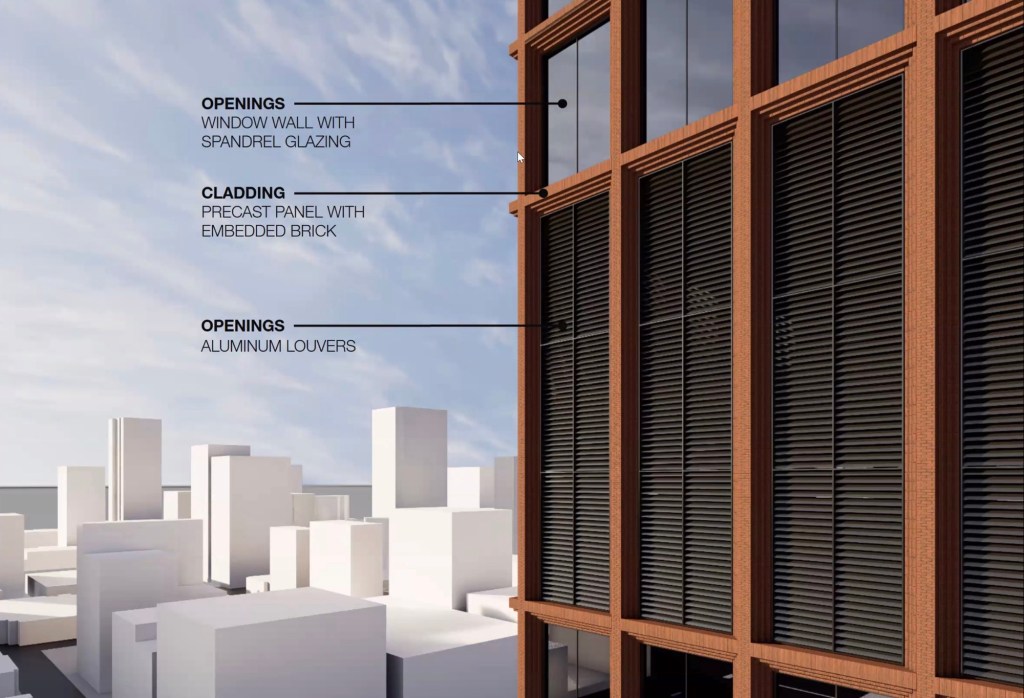
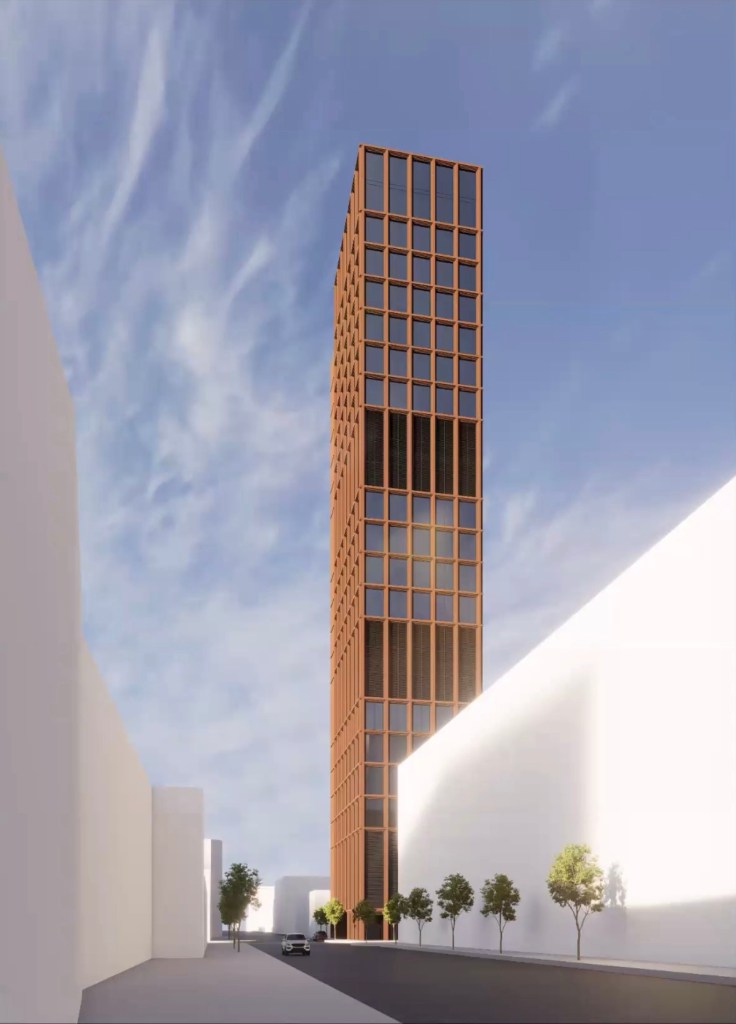
Most of the talking done during the meeting was by SOM architect Geoffrey Byrd and some supplementary comments made by Steve Austin of Revitalization Unlimited. Byrd stated that the plans for the new building pull from the surrounding neighborhood in order to create a structure that feels appropriate for the neighborhood despite its height. As a result, the building looks like it could be an office or residential building.
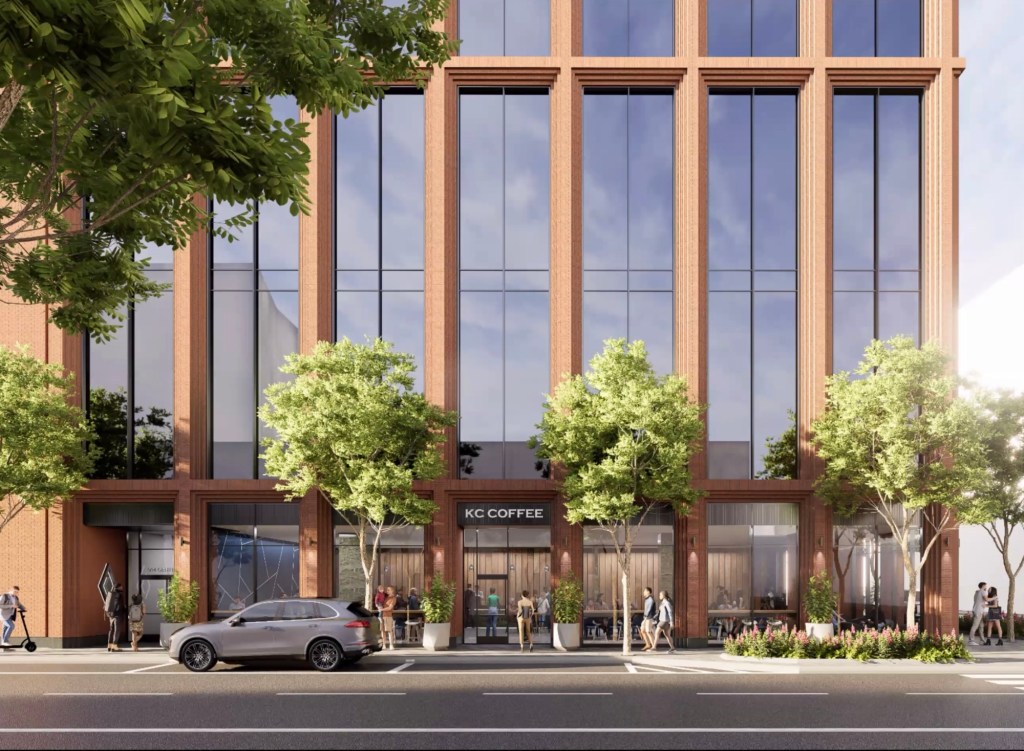
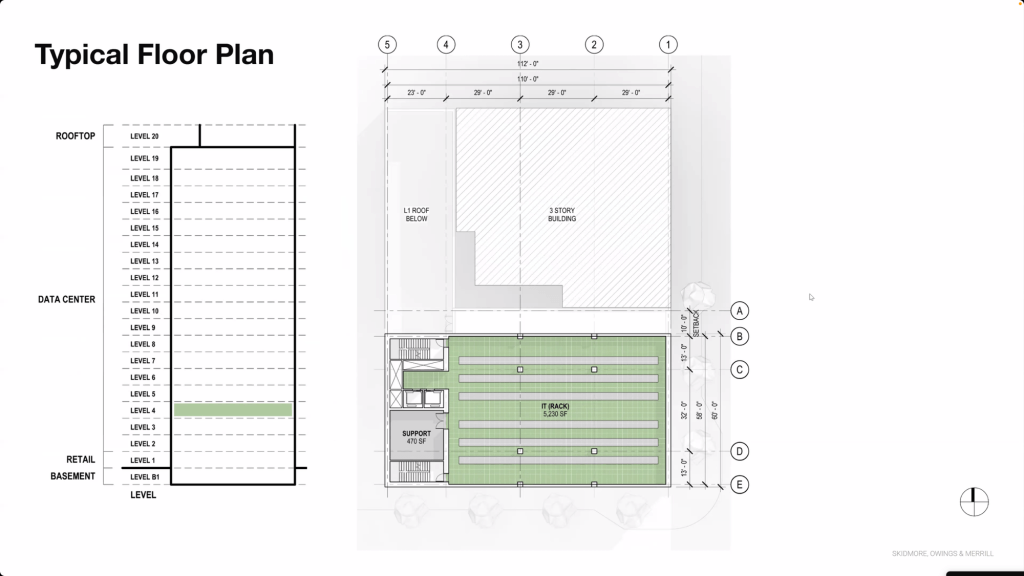
The primary materials are a mixture of red brick, glass, and metal. The data center will rise 19-stories and stand 384ft tall, which is the tallest of the recently proposed high-rise buildings in Downtown. Because of the site’s tight size (average floor size is only 6720sf), the architect emphasized that the architects enjoyed the challenge presented by the site, which allowed for the creation of a tall and slender tower, something that’s not often seen in cities outside of New York or Chicago.
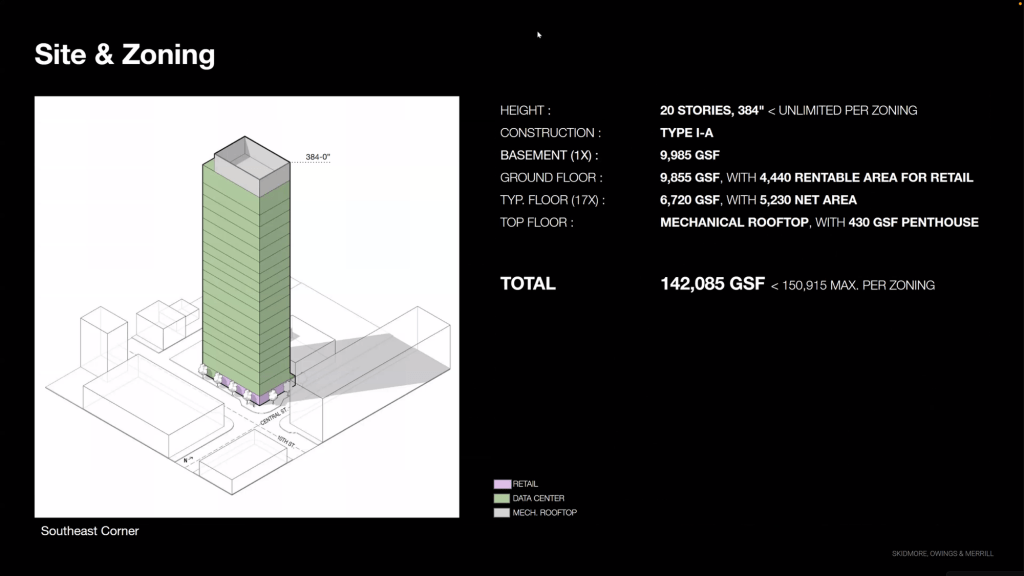
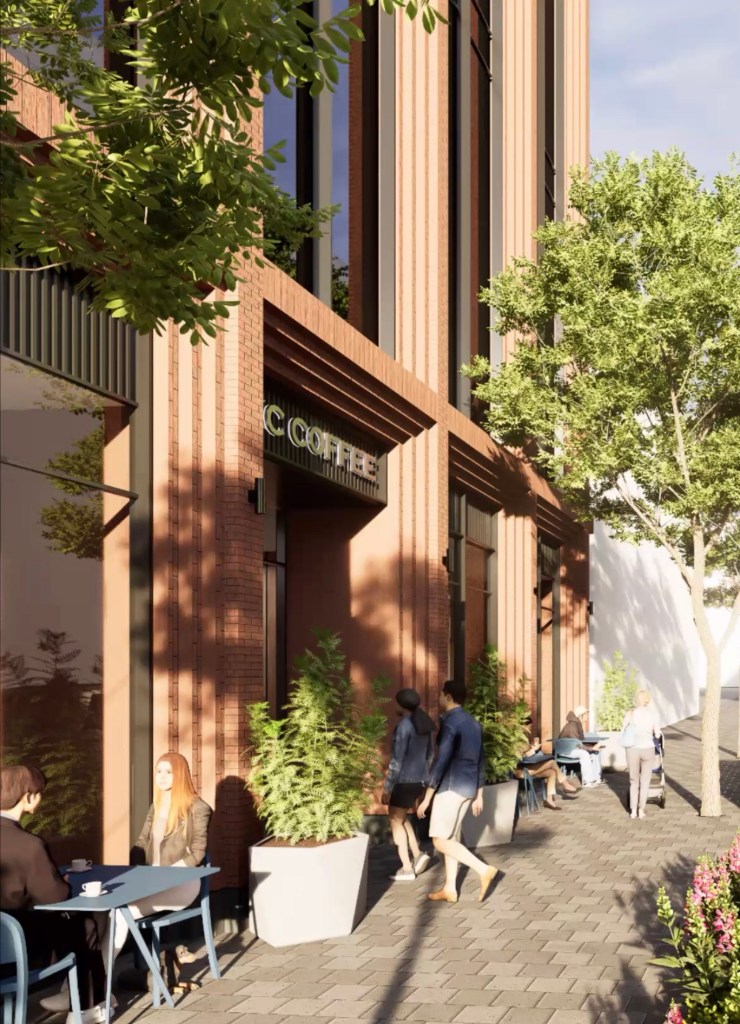
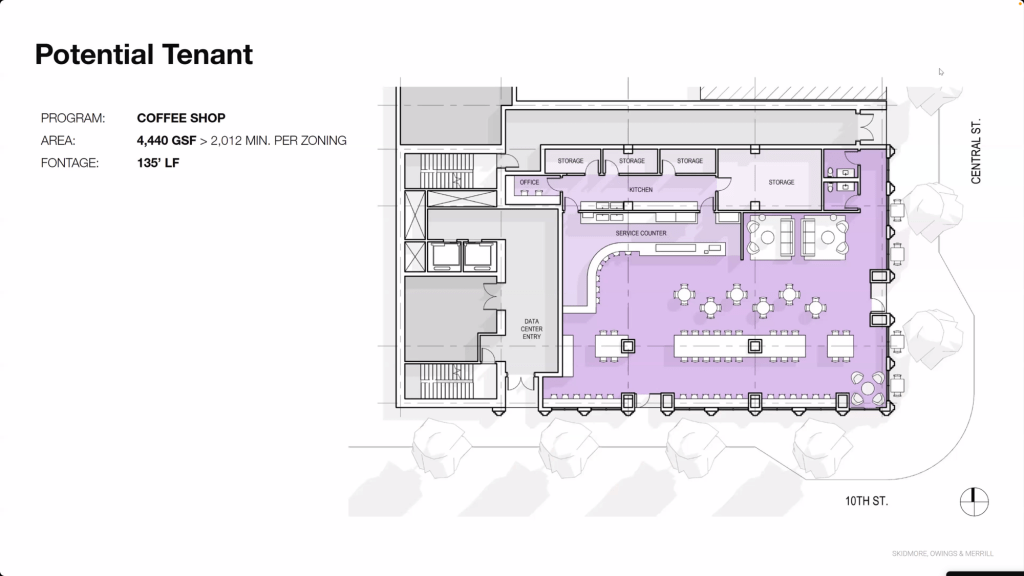
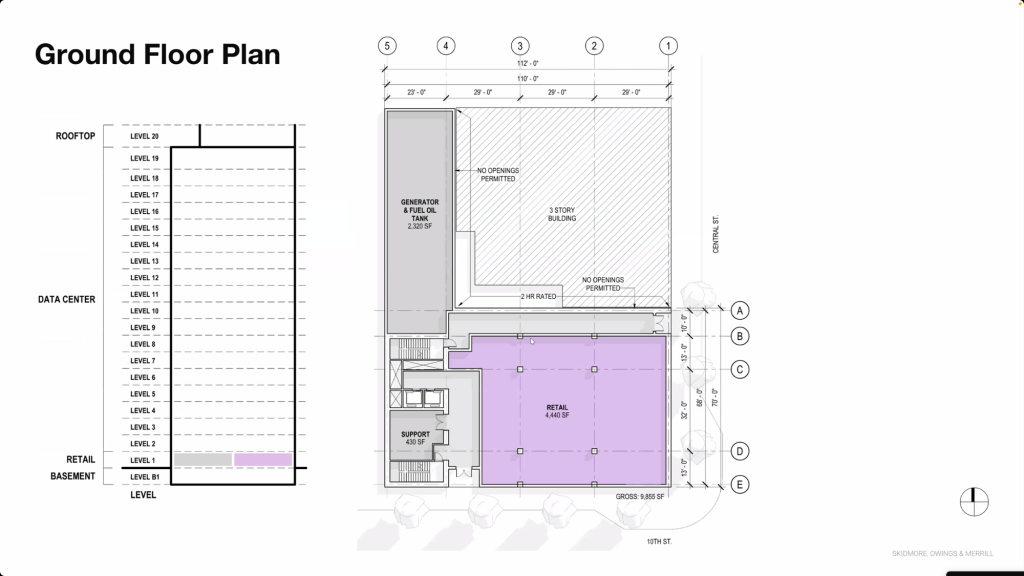
Unlike the Bryant Building (Netrality) at 11th and Grand or the AT&T Longlines Building at Truman and Oak, this proposed building features a 4440sf commercial space on the first floor, which the development team says is perfectly suited for a restaurant or large cafe to enhance street life. It’s accompanied by landscaping enhancements to the point where the Austin (developer) feels this will be “among the best 100-200ft of sidewalk to walk along in Downtown KC”.
Beginning on the 2nd floor and moving up from there will be the IT racks that make up data centers. Two levels will be ventilation levels, which Byrd explained are positioned high above the street so that “heat and any noise is mitigated for those on the ground”. One meeting attendee asked if any of the floors could be converted into another use, like office or residential, in the future if data centers go by the wayside, and Mr. Byrd said it’s possible to convert floors to another use in the future (if the need arose) because of the positioning of the elevators and stairs as well as the open floor plans and 3 sides of the building featuring windows.
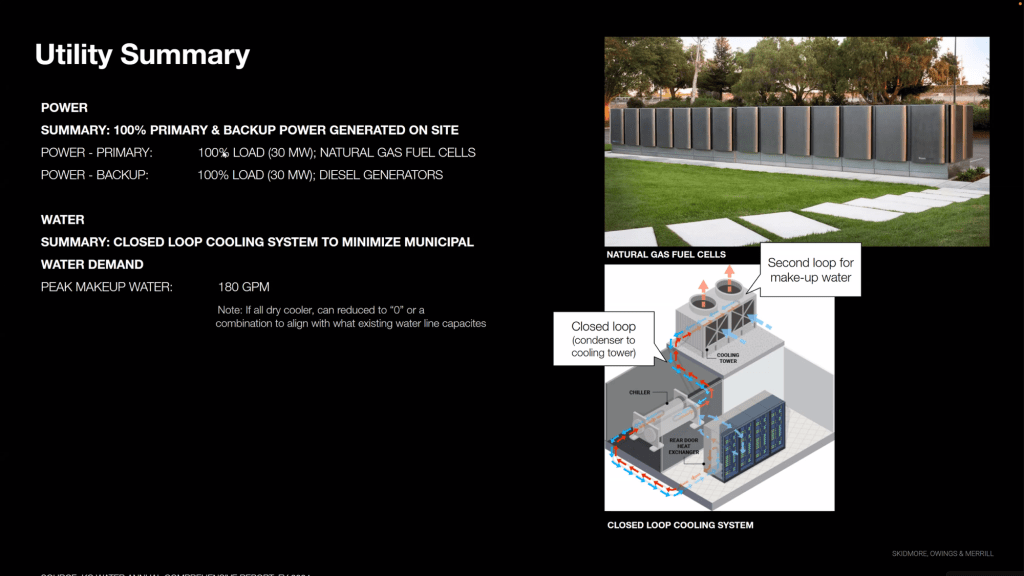
For power generation, the development team states they’ll use natural gas fuel cells to generate the 30 megawatts of power needed on-site without tapping into the Evergy grid. In the event natural gas service is disturbed, diesel generators will automatically kick on. Those same generators will be tested once per month and generate more noise than the building otherwise could, which Steve Austin said is a common feature in most new high-rises today. Additionally, water usage will be at a rate of about 180 gallons per minute through the “closed-loop” cooling system. The developer states that such an approach is different from other standard data centers developed on green fields, which typically pull from the local electric grid and consume even more water.
The architect shared that thanks to newer sound dampening technology, low frequency hums typically generated by data centers shouldn’t be heard and no exhaust should be generated by the fuel cells or IT stacks, just “some heat and water vapor”.
The building could be built with either post-tensioned concrete or precast concrete.
Why Here?
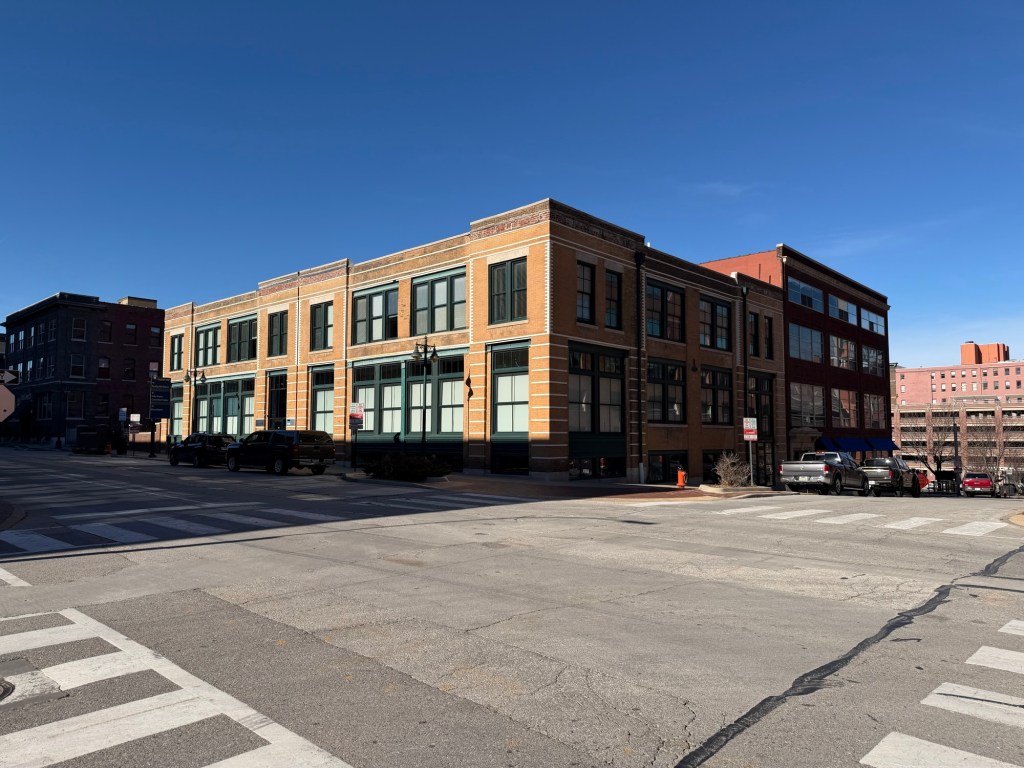
That was a question raised a few times by meeting attendees. After all, this is an existing older commercial building that’s still in use? Why demolish and replace when Downtown’s littered with multiple surface parking lots, and even abandoned and decaying garages like the one at 9th and Wyandotte? Mr. Austin seemed to push the responsibility of the decision making process back onto his investors and repeatedly said that his team “examines the impact and possibilities of any project that they pursue and go with the best possible outcome for their investors”.
It’s an interesting approach to a sensitive question within an already sensitive topic. Data centers aren’t viewed in a positive light as of right now, but potentially demolishing a contributing building in a Downtown that’s been decimated by demolition makes the situation even more iffy, especially when it seems like there’s a level of caving to investors to get a deal done. But the development team appeared to remain confident that their product would be different than the others.
Towards the end of the meeting, the developer made it clear that no decision has been made yet to advance with the demolition of the existing building or retain it, though it seemed more obvious which direction the developer is leaning – advance the data center plan. This assumption of mine is because of how a point was made that this would be a data center that helps power modern smartphone technology to remain competitive and relevant.
Per Steve Austin, the project will not seek a tax incentive, which is somewhat unique for a project in Kansas City, but less so for a data center. This means an annual tax contribution of several million dollars may be in order if the project’s built, benefiting the public school district as well as public safety, public works, and other city services.
There was no word on when a development plan submission to the City of Kansas City will be made. I expect that this project will generate a spirited debate about land use in Downtown and data centers in general. And for all we know, this could be a “case study” data center plan for how to build such a facility in a denser urban environment while mitigating the impacts of doing so.
Time will tell what comes of this project.
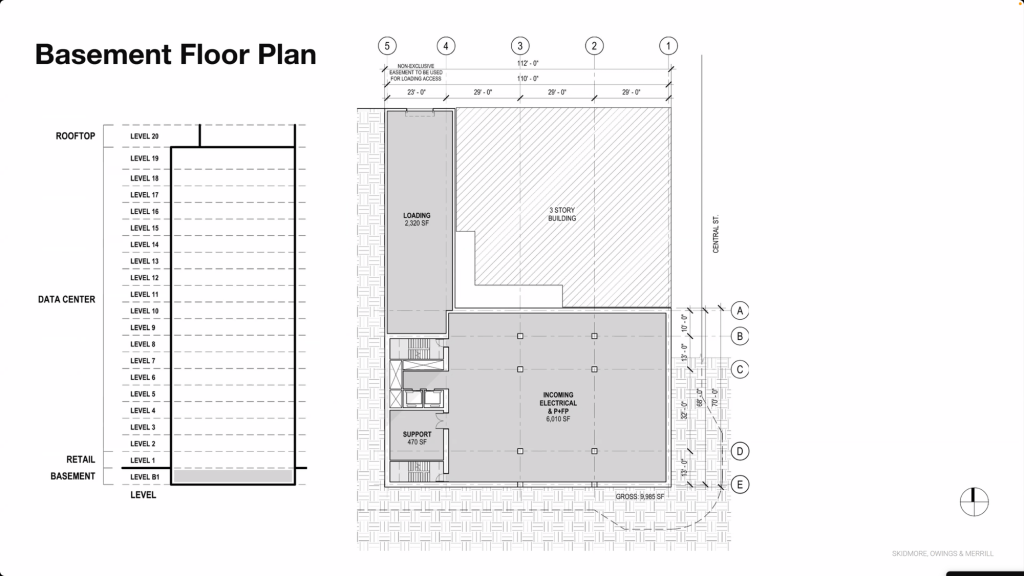
The gallery below features additional images of the project plan and floor layouts.
 The KC Pulse
Leave a comment